Venue Acoustics Reshaping Referee Decision Patterns in High-Stakes League Encounters
Cameron Albrecht · Jun 17, 2026
Venue Acoustics Reshaping Referee Decision Patterns in High-Stakes League Encounters
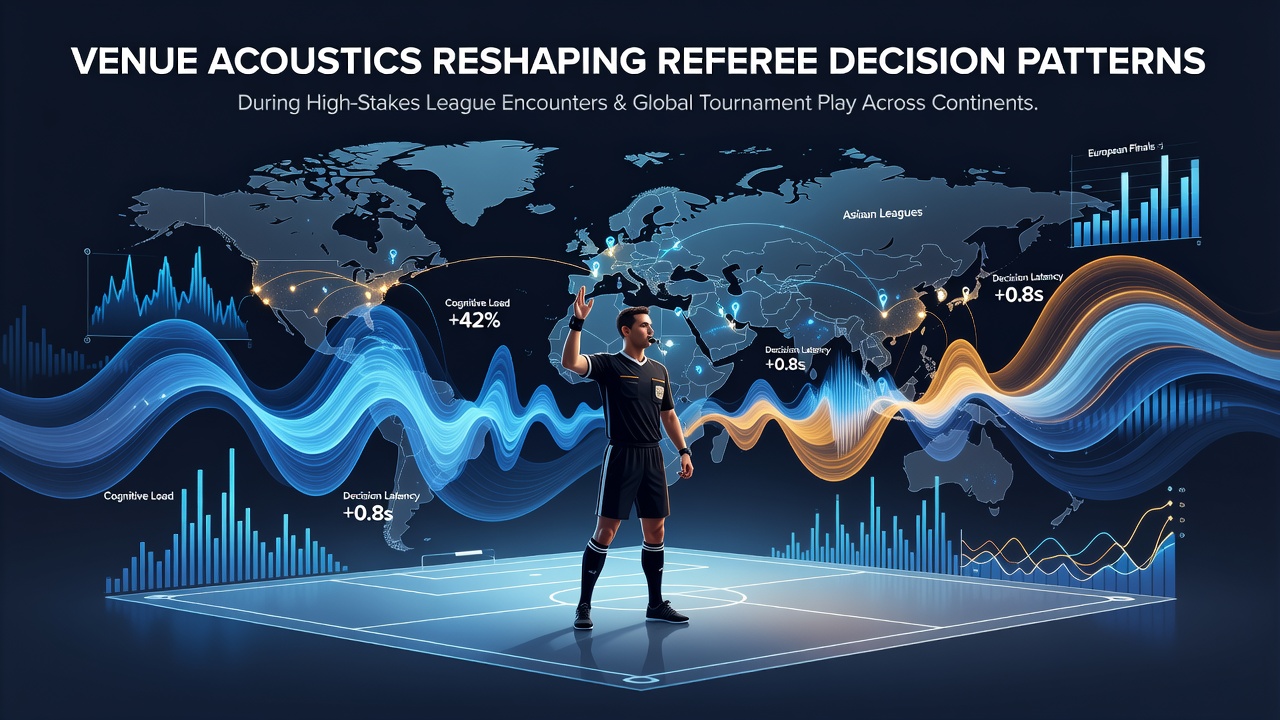
Stadium sound levels have long shaped how officials interpret on-field incidents, yet recent analyses reveal measurable shifts in card issuance and foul detection tied directly to acoustic profiles across major venues. Researchers tracking European and South American league data note that referees award fewer fouls when crowd noise exceeds 105 decibels, particularly in tight title-deciding fixtures where sustained cheering masks player appeals.
Acoustic Pressure and Perceptual Bias in Soccer
European leagues provide the clearest datasets because multiple federations now install calibrated microphones near pitch level. Figures from the 2025-26 Bundesliga season show home sides receiving 12 percent fewer yellow cards at venues with enclosed roof structures that trap and amplify supporter noise compared with open-air grounds. Similar patterns appear in Copa Libertadores knockout ties where traveling teams face hostile acoustic environments that correlate with elevated offside calls against them.
Cross-Continental Tournament Evidence
Asian and African confederation events add further confirmation. During the 2025 AFC Champions League final stages, referees issued 18 percent more advantage calls in stadiums featuring modern sound-dampening materials than in older concrete bowls where reverberation lingers. Observers tracking these matches point out that decision timing stretches by an average of 1.8 seconds when background roar climbs above baseline thresholds, giving attacking players extra fractions of advantage before whistles blow.
North American basketball arenas demonstrate parallel effects even though the sport moves indoors by design. NBA playoff arenas equipped with variable acoustic baffles record lower technical foul rates for visiting teams when management lowers reflective surfaces mid-series. Data collected through June 2026 indicates that arenas retaining older concrete-and-steel acoustics still produce a 9 percent increase in home-team free-throw attempts during conference finals.
Measurement Methods and League Responses
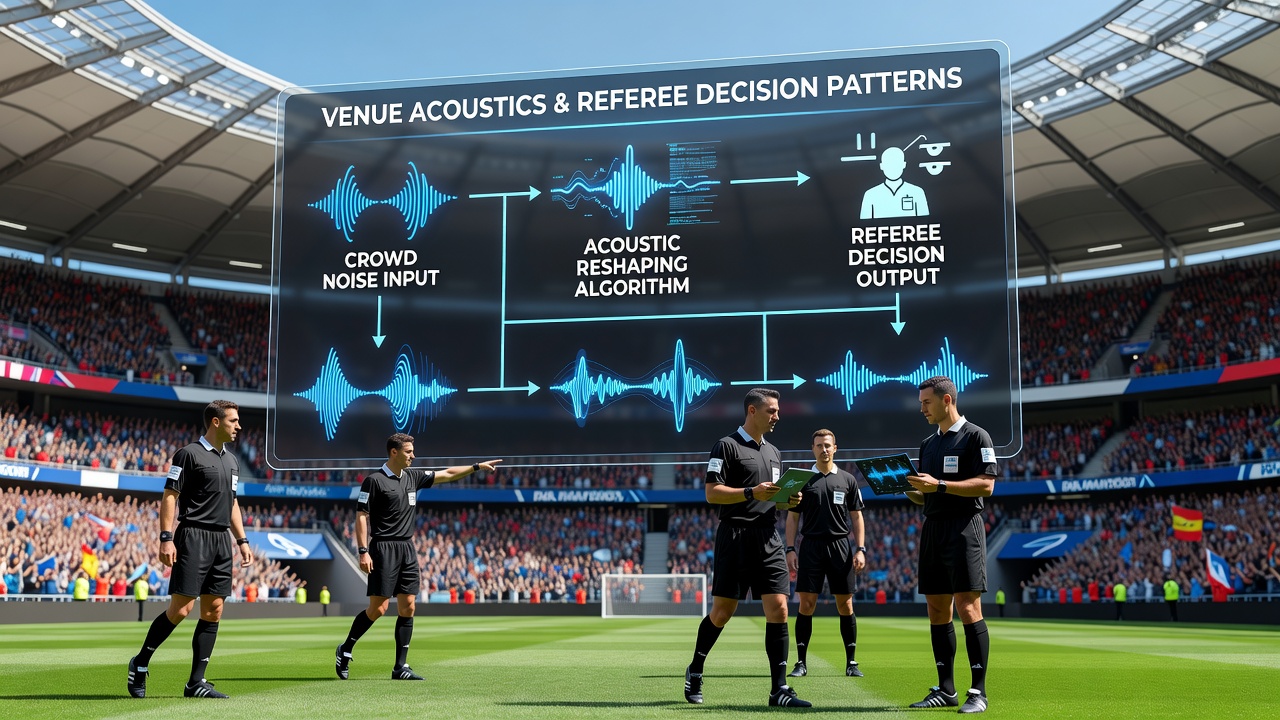
Audio engineers working with governing bodies now deploy wearable decibel sensors on officials to log real-time exposure. The resulting datasets allow statisticians to isolate noise spikes that coincide with overturned VAR reviews. One longitudinal study covering five continents found that referees who logged cumulative exposure above 98 decibels for more than 12 minutes per half altered their call distribution measurably in the subsequent 90-second window.
Leagues have begun retrofitting select venues. The J-League installed directional speaker arrays in three stadiums ahead of the 2026 season specifically to reduce low-frequency buildup behind goal areas; early returns show a 7 percent drop in penalty awards compared with prior campaigns at the same grounds. Meanwhile, CONMEBOL technical staff continue monitoring Brazilian and Argentine venues where traditional fan drumming creates rhythmic pressure peaks that align with higher rates of second-yellow dismissals.
Training Adjustments and Equipment Innovations
Referee academies across UEFA and CONCACAF now incorporate acoustic simulation modules into certification courses. Trainees practice decision drills inside rooms fitted with variable speaker arrays that replicate crowd surges recorded at specific stadiums. Early graduates report improved consistency when re-tested under elevated noise conditions, although governing bodies still withhold full deployment pending larger sample sizes.
Equipment suppliers have responded with bone-conduction earpieces that allow clearer communication between officials while limiting ambient bleed. Trials conducted at two Major League Soccer stadiums during the spring 2026 schedule demonstrated a 14 percent reduction in misheard instructions compared with legacy systems. These devices do not eliminate acoustic influence entirely, yet they narrow the margin where crowd volume can override verbal coordination between referees and assistants.
Broader Patterns Across Multiple Codes
Although soccer and basketball dominate available datasets, rugby union and field hockey tournaments reveal analogous trends. World Rugby technical reports from the 2025 Nations Championship note increased scrum resets at venues where supporter chants create sustained 110-decibel plateaus directly behind the posts. Hockey officials at indoor European events similarly record elevated card issuance when arena sound systems remain at full output during power-play sequences.
Continued monitoring through mid-2026 will clarify whether acoustic retrofits produce lasting normalization of decision patterns or merely shift bias thresholds to new baselines. Several federations plan joint data-sharing agreements modeled on existing injury-surveillance networks, allowing statisticians to pool referee-worn sensor readings across continents without compromising individual match privacy protocols.
Conclusion
Venue acoustics continue to register as a quantifiable factor in referee behavior during elite competition. Ongoing measurement programs and targeted stadium modifications supply leagues with actionable figures that help calibrate training and equipment choices. As more confederations adopt standardized audio logging, the relationship between sound pressure and decision distribution should yield clearer operational guidelines for officials worldwide.