Travel Recovery Patterns Dictating Form Trajectories in Congested Calendars for Soccer Clubs and Tennis Circuits
Wendy Wolf · Jul 1, 2026
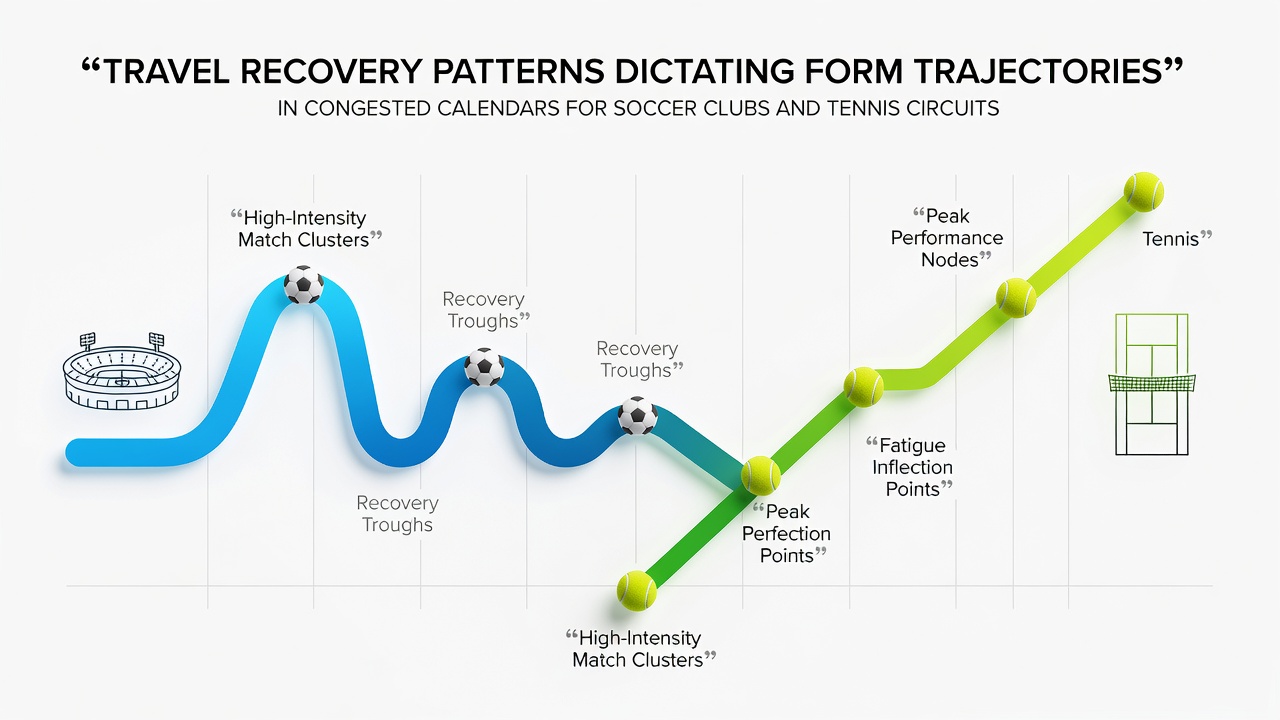
Travel Recovery Patterns Dictating Form Trajectories in Congested Calendars for Soccer Clubs and Tennis Circuits
Travel schedules and recovery timelines shape performance outcomes across professional soccer leagues and tennis tours, where congested fixtures create measurable shifts in form. Data compiled from multiple seasons shows clubs and players who face extended flights or rapid time zone changes often experience dips in key metrics such as sprint distance covered and serve accuracy, while those with structured rest periods maintain steadier trajectories through packed months. Observers tracking European soccer note that teams balancing domestic leagues with continental competitions encounter repeated disruptions from midweek travel. Research conducted by sports science groups in Australia highlights how flights exceeding eight hours correlate with reduced high-intensity running in the subsequent 72 hours, a pattern that repeats across the English Premier League, La Liga, and Serie A during autumn and spring blocks. Those studying these effects point to examples where squads traveling from northern Europe to southern fixtures return with altered possession retention rates that persist until midweek recovery windows allow physiological markers to stabilize.Soccer Clubs Navigating Fixture Congestion
Compressed calendars in 2026 place additional strain on recovery protocols for clubs competing in multiple competitions simultaneously. Figures released by the Union of European Football Associations indicate that teams averaging more than 50 matches per season allocate specific blocks for jet-lag management, yet outcomes vary depending on flight direction and arrival timing. Eastward travel tends to produce slower adaptation in sleep cycles compared with westward journeys, according to longitudinal tracking of heart-rate variability in elite squads.
Coaches adjust training loads accordingly, shifting emphasis toward lighter sessions on arrival days while monitoring muscle soreness indicators collected through wearable devices. One analysis of Bundesliga schedules from the prior campaign revealed that clubs with home fixtures immediately following long-haul trips maintained higher pass completion percentages than those required to depart again within 48 hours. These patterns repeat across domestic cups and European group stages, where fixture lists leave limited flexibility for rest.
Tennis Circuits and Recovery Demands
Tennis tours present parallel challenges because players frequently move between continents within days, often contesting best-of-five-set matches on successive surfaces. Performance data from the Association of Tennis Professionals circuit demonstrates that recovery periods shorter than 72 hours after transatlantic flights associate with declines in first-serve percentages and rally endurance. Players crossing multiple time zones for events in Australia, North America, and Europe encounter cumulative fatigue that compounds across the spring hard-court swing and the European clay season.
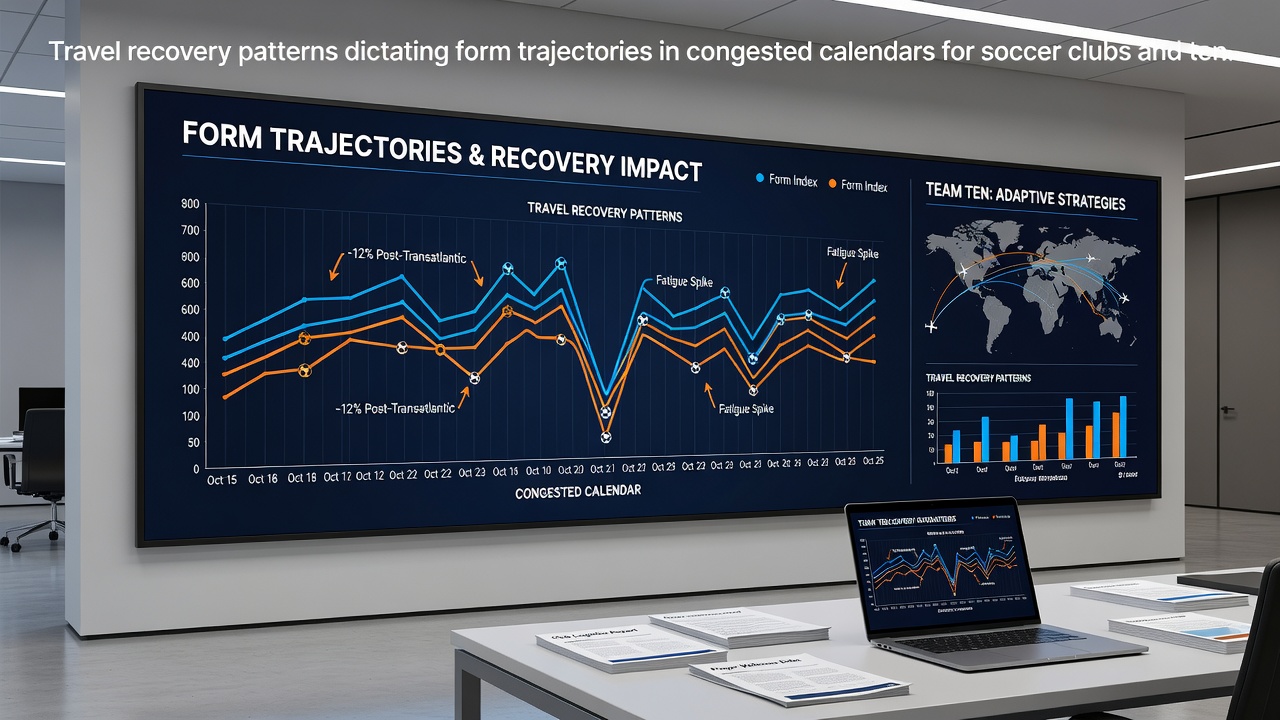
July 2026 falls between Wimbledon and the North American hard-court swing, a window when several top-ranked competitors schedule limited appearances to reset circadian rhythms before the US Open series. Studies from Canadian research institutions tracking cortisol levels in touring professionals confirm that athletes incorporating structured sleep protocols and adjusted training volumes exhibit more consistent win rates during this compressed phase of the calendar. Surface changes add another layer, because clay-court specialists who travel directly to faster hard courts without adequate adaptation time show measurable drops in movement efficiency during early rounds.
Comparative Patterns Across Both Sports
Analyses comparing soccer and tennis reveal overlapping mechanisms despite differing match structures. Both domains register performance decrements when travel intervals fall below established recovery thresholds, with biometric tracking systems documenting elevated fatigue scores that align with reduced output in subsequent contests. Researchers examining these trajectories note that preparation routines emphasizing hydration, nutrition timing, and light mobility work produce more stable form lines through congested periods than ad-hoc approaches.
League organizers and tour administrators continue to examine calendar density, yet the interplay between commercial demands and athlete welfare remains a central consideration. Data aggregated from multiple governing bodies shows gradual adoption of minimum rest mandates in certain competitions, although enforcement and scheduling constraints limit uniform application across continents.
Conclusion
Travel recovery patterns continue to influence form trajectories for soccer clubs and tennis circuits operating under congested calendars, with quantitative evidence linking flight duration, time-zone shifts, and rest intervals to subsequent performance indicators. Patterns observed through 2026 underscore the value of targeted recovery strategies that account for individual physiological responses rather than generic timelines. As calendars evolve, ongoing collection of biometric and match data provides clearer insight into how these variables interact across both sports.