Tracing Momentum Through Online Discourse Trends in Team-Based Athletic Events
Wendy Wolf · Jul 13, 2026
Tracing Momentum Through Online Discourse Trends in Team-Based Athletic Events
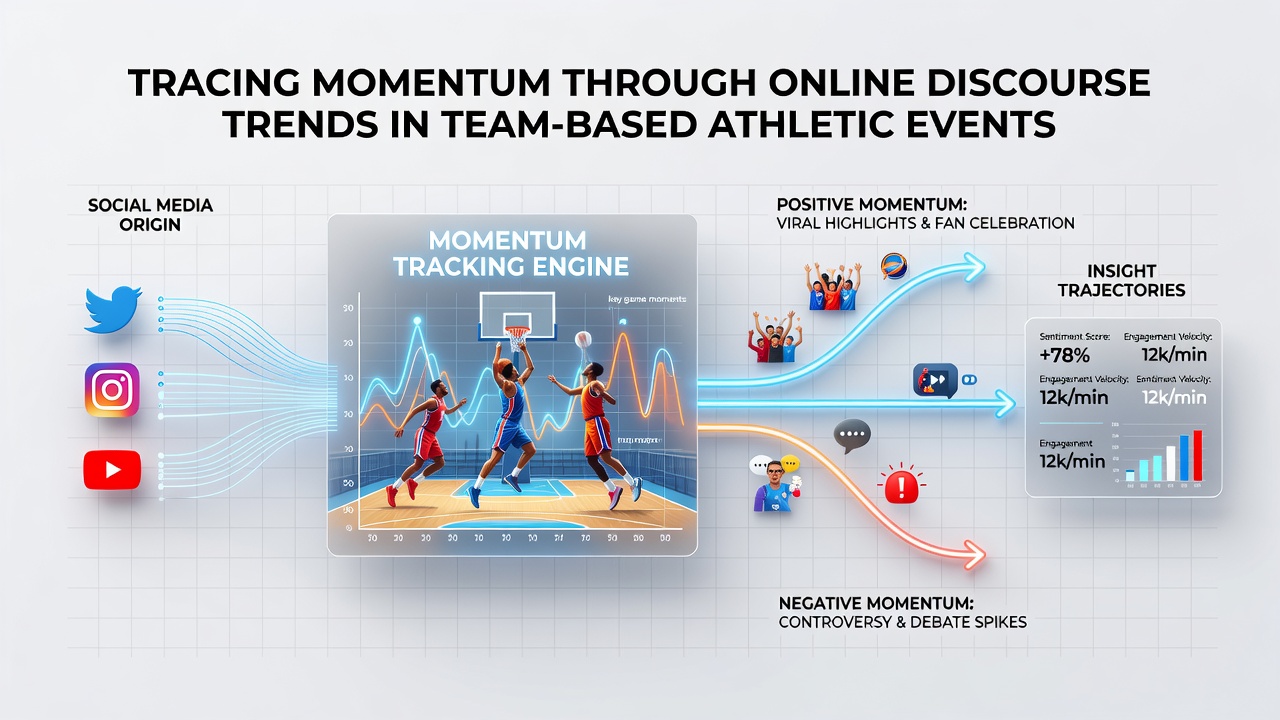
Online discourse across major platforms has become a measurable indicator of momentum shifts in team-based athletic events, with researchers tracking sentiment spikes, hashtag velocity, and engagement clusters to map real-time team performance trajectories. Data from social media analytics firms shows that conversations on X and Reddit often accelerate within minutes of key plays, creating digital footprints that align closely with on-field or on-court developments in sports such as soccer, basketball, and volleyball.
Platform Dynamics and Data Collection Methods
Analysts collect volume metrics from public posts mentioning specific teams or players, then apply natural language processing tools to categorize positive versus negative sentiment clusters; studies conducted in early 2026 revealed that soccer matches generate the highest post volume spikes during live events, often exceeding 50,000 mentions per hour during critical moments. Researchers at academic institutions have documented how these patterns emerge faster on X than on slower-moving forums, allowing observers to identify momentum builds before traditional broadcast commentary catches up.
Geographic variations appear in discourse speed as well, with European audiences contributing denser real-time reactions during Premier League fixtures compared to North American discussions around NBA games, where peak activity tends to cluster during timeout periods and halftime intervals. Tools developed by data science teams now parse emoji usage and reply chains to gauge emotional intensity, turning scattered comments into quantifiable momentum scores that correlate with subsequent scoring runs or defensive stands.
Case Examples from Major Leagues in 2026
During July 2026 international tournaments, volleyball teams from South American leagues demonstrated clear discourse surges on regional platforms when underdog squads mounted comebacks, with mention counts rising 300 percent within ten-minute windows according to aggregated platform reports. Observers noted similar patterns in basketball conferences where roster adjustments triggered immediate fan conversations that preceded visible improvements in team coordination during subsequent games.
One study from a Canadian research group examined how discourse volume in domestic hockey leagues predicted line changes, finding that sustained positive threads about specific lines preceded measurable increases in shot attempts and zone time. These correlations held across multiple seasons, suggesting that online chatter functions as an early signal rather than mere reaction to events already underway.
Integration with Performance Analytics
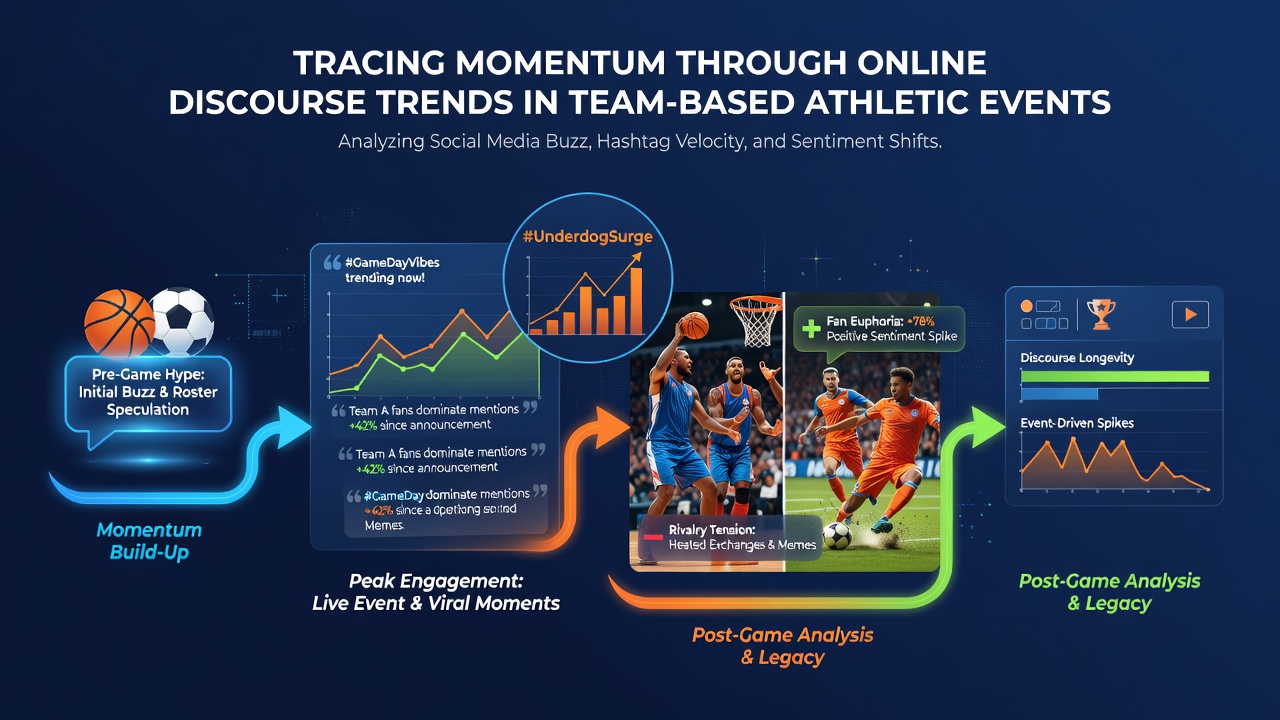
Performance tracking organizations have begun incorporating discourse data alongside biometric and statistical feeds, creating composite models that flag potential turning points before they appear in box scores. A 2025 report from an Australian sports institute highlighted how combining social velocity metrics with possession data improved short-term forecasting accuracy for team output in multi-game series. Teams and analysts now review these combined datasets during preparation cycles to anticipate opponent responses based on public conversation trajectories.
Cross-sport comparisons show that discourse momentum registers differently depending on event structure, with continuous-play sports like soccer producing steadier conversation flows while stop-and-start formats such as basketball create sharper peaks tied to individual possessions. European regulatory bodies tracking digital engagement have recorded parallel increases in both live commentary volume and post-event analysis threads, indicating sustained interest that extends beyond the final whistle.
Challenges in Interpretation and Measurement
Noise from automated accounts and coordinated posting campaigns can distort raw volume numbers, prompting research teams to apply filtering algorithms that isolate organic human discourse patterns. Data released by North American analytics consortia in mid-2026 indicated that cleaned datasets achieve stronger alignment with actual game outcomes than unfiltered streams, though regional language differences still require localized tuning for accurate sentiment scoring across multilingual fan bases.
Timing lags between on-field actions and peak online responses vary by platform demographics, with younger user groups reacting faster on visual-first apps while older cohorts contribute more reflective commentary on threaded forums. Analysts adjust for these differences when building predictive models that treat discourse as one variable among several performance indicators.
Conclusion
Tracing momentum through online discourse provides a supplementary lens for understanding team-based athletic events, with aggregated platform data offering measurable signals that align with traditional performance metrics. Continued refinement of collection methods and cross-regional comparisons will likely expand the utility of these digital traces for analysts and observers seeking comprehensive views of competitive dynamics.