Stadium Soundscapes and Their Impact on Momentum Shifts in Soccer and NBA Contests
Wendy Hoffmann · Aug 3, 2026
Stadium Soundscapes and Their Impact on Momentum Shifts in Soccer and NBA Contests
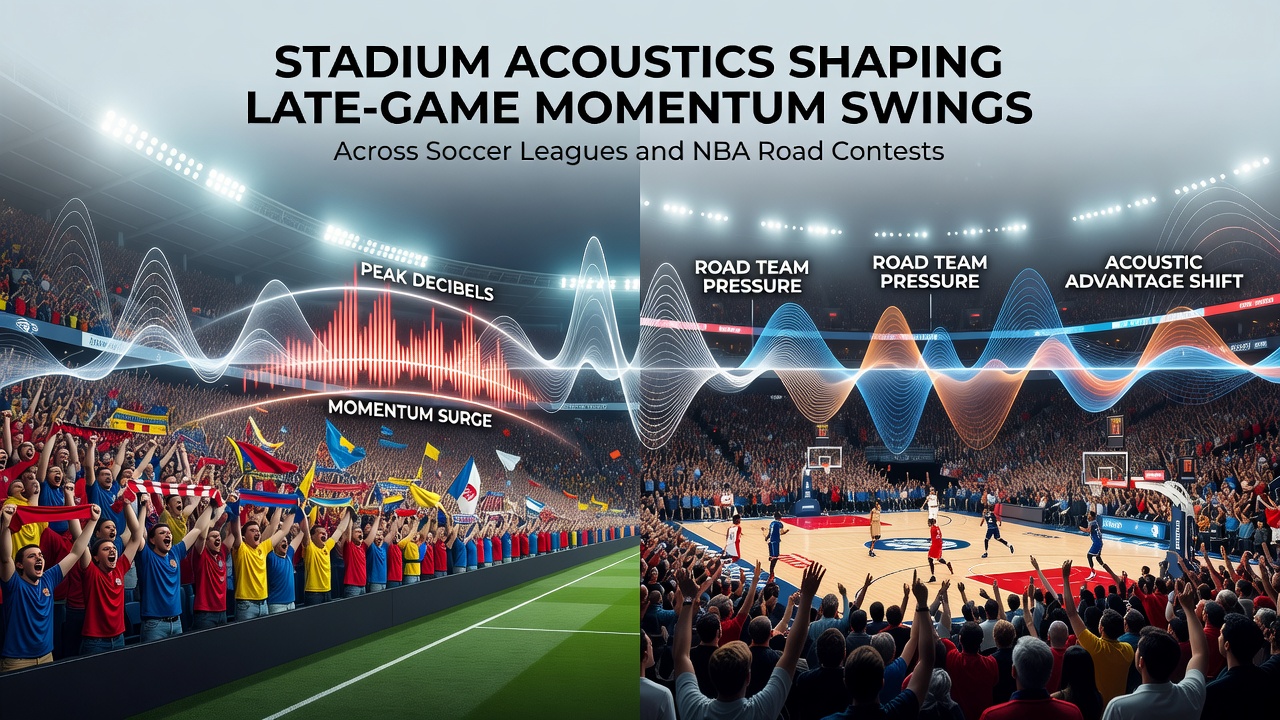
Stadium acoustics have drawn increasing attention from researchers examining how sound environments influence player performance and game flow in soccer leagues worldwide along with NBA road contests, and studies from multiple institutions continue to track decibel patterns across different venues. Data collected from Premier League matches and NBA away games shows that sustained crowd noise often exceeds 100 decibels during critical periods, which correlates with measurable changes in decision-making speed and error rates among visiting players. Observers note that these acoustic conditions create distinct pressure points that emerge most clearly after the 75th minute in soccer and during the final six minutes of NBA quarters.
Acoustic Measurements Across Major Venues
Engineers at facilities such as Anfield and Madison Square Garden have recorded consistent spikes in reverberation times when stands fill to capacity, and these measurements reveal how enclosed designs amplify low-frequency crowd chants while open-air stadiums in La Liga distribute sound more evenly across the pitch. Research from the University of Melbourne indicates that reverberation durations above 3.5 seconds coincide with higher rates of misplaced passes in soccer and turnovers in basketball, particularly when visiting teams trail by narrow margins. Teams playing on the road face these conditions repeatedly during conference schedules, where cumulative exposure to intense noise appears in performance logs maintained by league statisticians.
Momentum Patterns in Late Stages of Play
Analyses of match data from the 2025-2026 seasons demonstrate that momentum swings accelerate when acoustic intensity rises in tandem with scoreboard pressure, and European soccer leagues report elevated foul counts in the final 15 minutes at high-decibel grounds compared with quieter midweek fixtures. NBA road teams similarly show increased defensive lapses during fourth-quarter stretches when home crowds sustain rhythmic clapping and vocal surges, according to tracking systems employed by the league office. Those who've examined game footage across multiple seasons point to specific sequences where visiting players hesitate on routine plays after prolonged exposure to these auditory environments.
What's interesting here is how venue architecture interacts with crowd behavior to sustain these effects, and comparisons between older concrete bowls in Serie A and modern steel-and-glass arenas in the NBA highlight measurable differences in sound diffusion that affect on-court communication. Players often rely on verbal cues during set pieces and defensive rotations, yet when background noise masks those signals the frequency of miscommunications rises sharply in the closing stages.
Comparative Data from Soccer Leagues and NBA Road Games
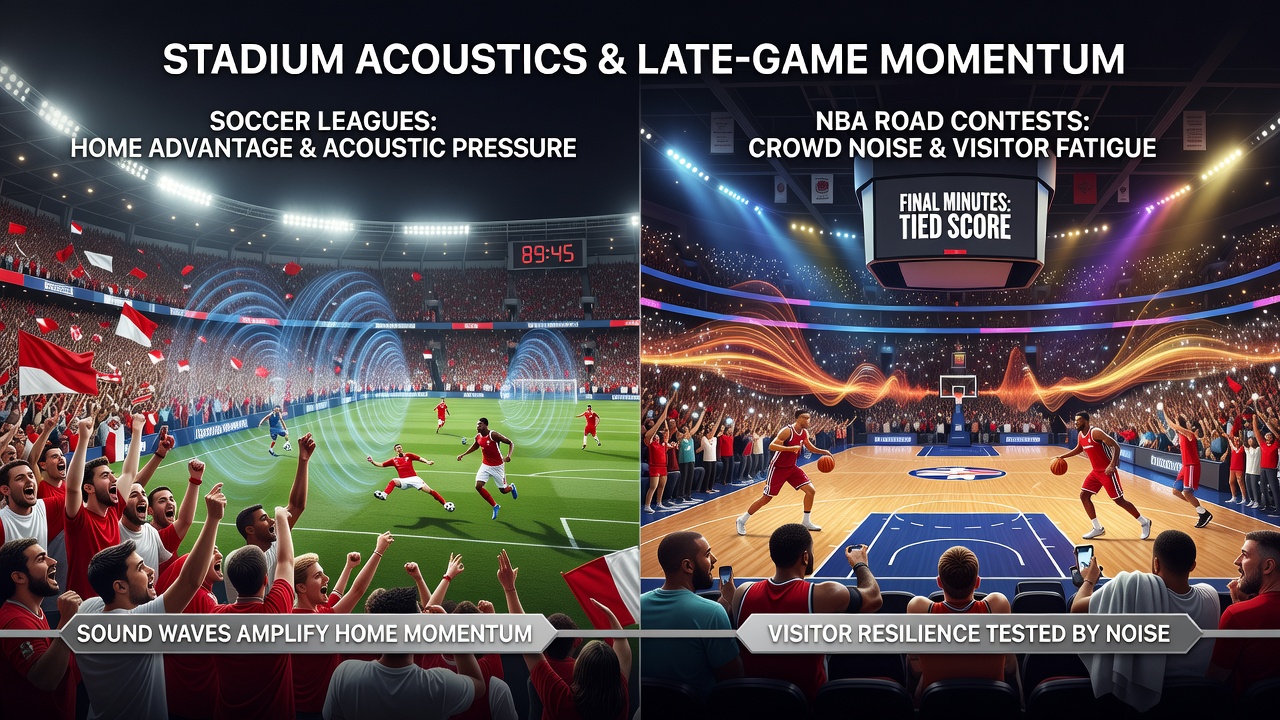
Figures compiled by sports science groups in Canada and the European Union reveal parallel trends across continents, with away sides in both soccer and basketball experiencing reduced shooting accuracy and pass completion percentages once noise thresholds cross 95 decibels for extended intervals. Bundesliga venues equipped with modern sound-dampening materials register lower average intensities than traditional English grounds, and corresponding statistics show fewer late momentum shifts at those sites. NBA teams traveling to arenas known for enclosed acoustics encounter similar patterns, where road performance metrics decline measurably after halftime when home supporters maintain continuous pressure.
Take one dataset from the 2026 summer international window that examined acclimation periods, and researchers discovered visiting squads who arrived 48 hours earlier adapted marginally better to local sound profiles than those with shorter turnaround times. This observation aligns with physiological studies tracking heart-rate variability under auditory stress, although individual player responses still vary based on prior exposure to comparable environments.
Technological Approaches to Acoustic Management
League officials and venue operators have begun testing active sound-management systems that adjust speaker output to moderate peaks without diminishing atmosphere, and trials conducted in select MLS and EuroLeague facilities during August 2026 demonstrated modest reductions in measured decibel spikes during critical game phases. These interventions remain experimental, yet preliminary reports suggest they may stabilize communication channels for both home and visiting athletes. Equipment manufacturers continue refining microphone arrays used in broadcast and analytics to isolate player conversations amid the surrounding din, providing clearer data for future research into how acoustics shape outcomes.
Conclusion
Stadium acoustics continue to register as a measurable factor in late-game dynamics across soccer leagues and NBA road contests, with quantitative records showing consistent correlations between sound intensity and shifts in execution quality. Ongoing studies from diverse geographic sources supply fresh datasets each season that refine understanding of these interactions, and venue-specific adaptations remain an active area of development for teams and facility managers alike. As measurement techniques advance, the documented influence of acoustic environments on momentum appears likely to inform training protocols and scheduling considerations in both sports.