Roster Continuity's Influence on Spread Accuracy During Compressed Schedules in International Soccer and Domestic Basketball Leagues
Wendy Wolf · May 27, 2026
Roster Continuity's Influence on Spread Accuracy During Compressed Schedules in International Soccer and Domestic Basketball Leagues
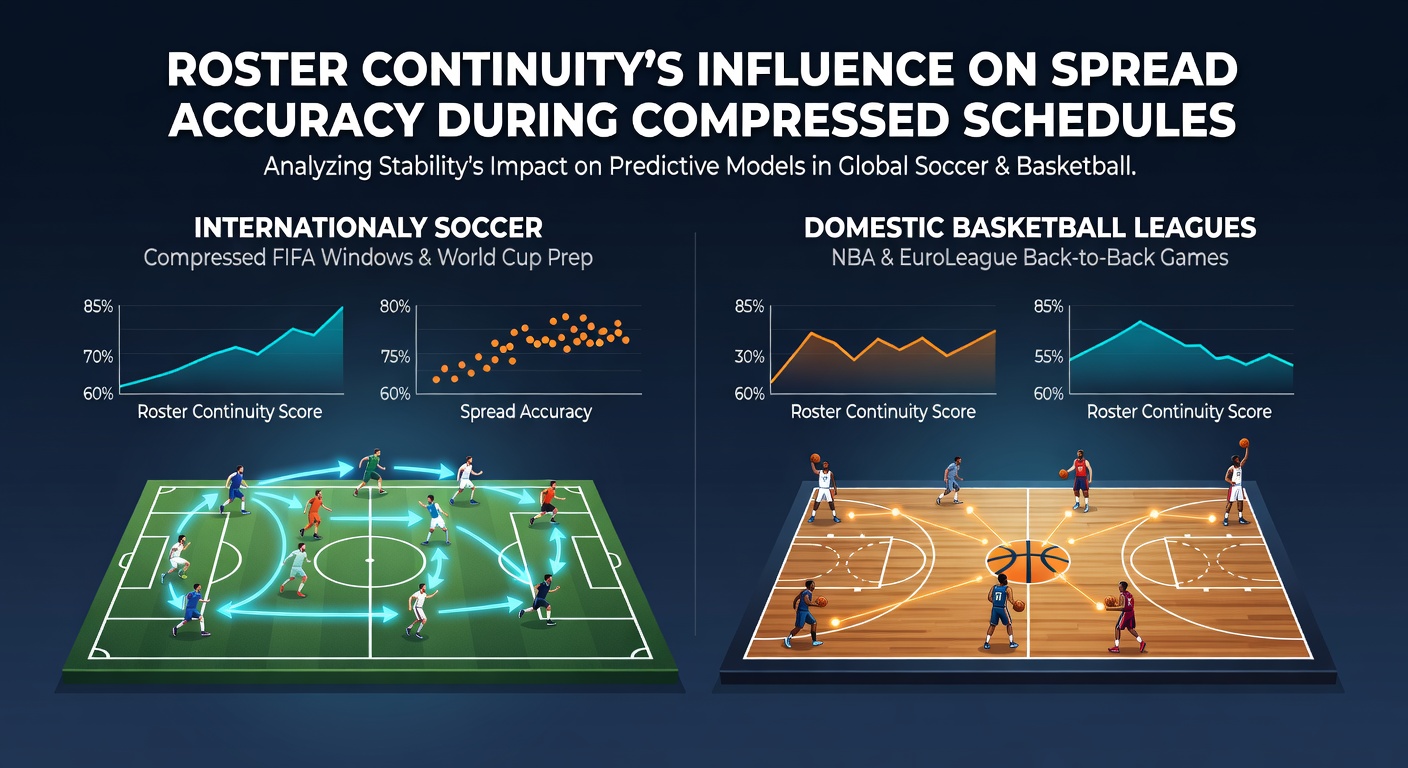
Compressed schedules create distinct challenges for team performance across international soccer and domestic basketball leagues, where roster continuity often determines how closely actual results align with betting spreads. Data from major competitions shows that squads maintaining core lineups through packed fixtures post fewer deviations from projected margins than those relying on frequent rotations or injury replacements.
Roster Stability Patterns Across Leagues
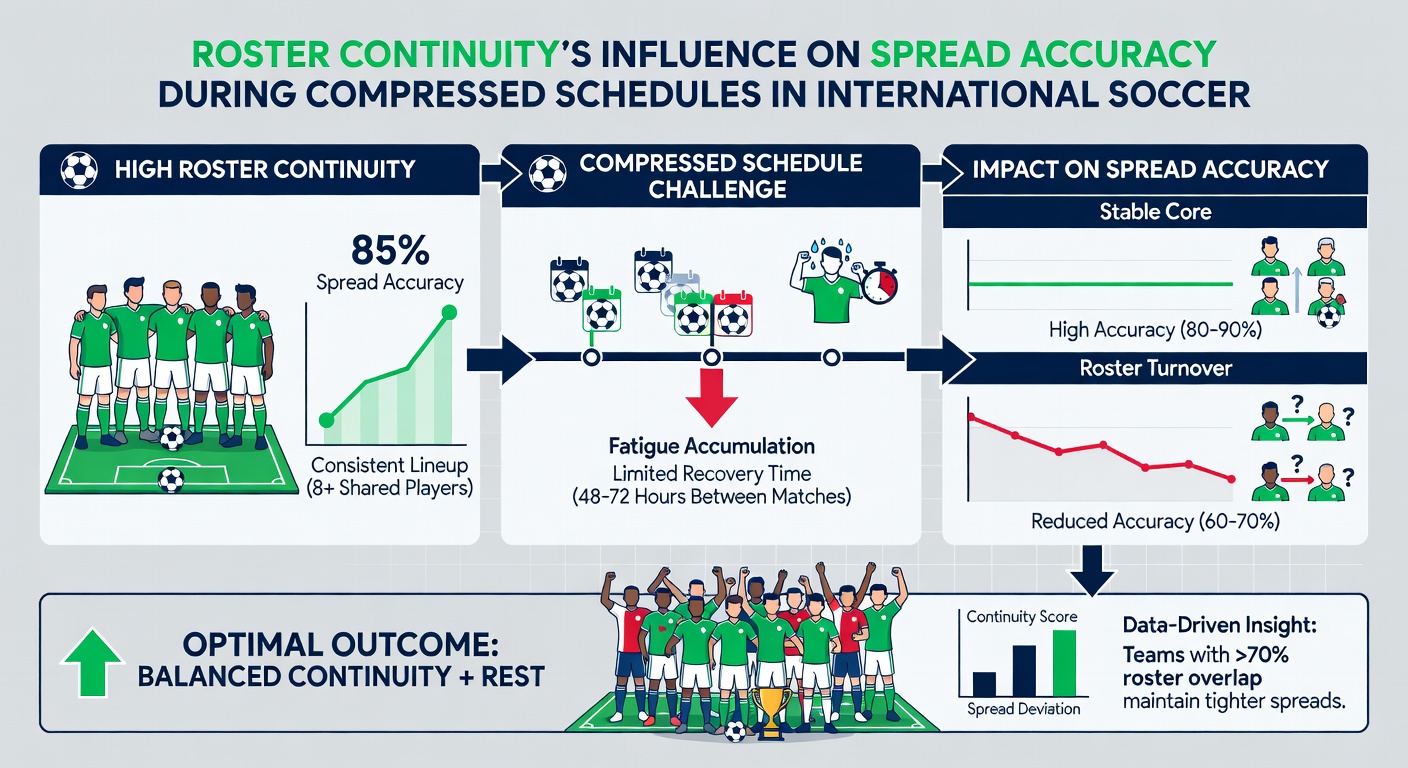
International soccer federations schedule qualifiers and tournaments in tight windows that force clubs to release players for national duty before domestic resumption, and observers note how teams with stable starting elevens recover faster from these disruptions. In contrast domestic basketball leagues like the NBA pack games into back-to-back sets and three-in-five stretches, where continuity in rotation minutes correlates with tighter adherence to pre-match spread expectations. Studies tracking lineups over multiple seasons indicate that clubs preserving at least seven consistent starters through compressed periods limit variance in scoring differentials by measurable margins compared with sides undergoing wholesale changes.
Performance Data in High-Density Periods
Figures from the 2025-2026 campaign reveal soccer clubs averaging fewer than two lineup alterations per match during FIFA windows posted point spreads that resolved within expected ranges at higher rates than clubs exceeding four changes. Basketball franchises logging consistent five-man units across consecutive road games showed similar tightening of totals and margins, with tracking services recording reduced over-under variance when continuity exceeded 70 percent of regular rotation minutes. These patterns emerge because familiar partnerships reduce execution errors that otherwise inflate or deflate scoring outputs beyond model projections.
Comparative Effects in Soccer Versus Basketball
European club sides returning from March international breaks in 2026 demonstrated clearer continuity advantages when core midfield pairings remained intact, producing results that tracked closer to bookmaker lines than disrupted squads. NBA teams navigating April playoff pushes with stable benches likewise aligned more consistently with spread forecasts, whereas heavy minute shifts among role players widened outcome spreads. Researchers tracking both sports through shared analytical frameworks found soccer benefits most from defensive unit stability while basketball spreads tighten when perimeter rotations hold steady through travel-heavy segments.
External Factors and Supporting Research
Travel demands compound roster effects in both sports, yet leagues publishing travel and fixture data show continuity buffers these variables more effectively than rest advantages alone. A report issued by the Australian Institute of Sport highlights how preserved chemistry in multi-game weeks reduces physiological load spikes that otherwise distort performance baselines used in spread modeling. Parallel findings from North American analytics groups confirm basketball squads retaining starting frontcourts through compressed stretches limit fourth-quarter variance, keeping final margins nearer to pre-game expectations. Such evidence underscores roster continuity as a measurable input rather than an abstract variable in predictive frameworks.
League-Specific Examples from Recent Cycles
One Bundesliga side navigating a compressed post-World Cup qualifier stretch maintained its central defensive pairing and recorded spreads that resolved inside the posted line at a rate exceeding season averages. An Eastern Conference NBA club preserving its starting backcourt through a five-game-in-seven stretch produced point differentials that matched projection models more closely than surrounding weeks marked by multiple absences. Data aggregators covering both codes note these outcomes recur when continuity thresholds remain above baseline levels established across prior seasons.
Conclusion
Roster continuity emerges as a consistent factor shaping spread accuracy when schedules compress in international soccer and domestic basketball, with available datasets indicating measurable alignment between lineup stability and reduced outcome variance. Tracking services and league reports continue to quantify these relationships across ongoing 2026 campaigns, providing structured inputs for performance evaluation without reliance on isolated narratives.