Preseason Training Loads Influence Early Season Victory Margin Trends in Professional Leagues
Wendy Hoffmann · Aug 10, 2026
Preseason Training Loads Influence Early Season Victory Margin Trends in Professional Leagues
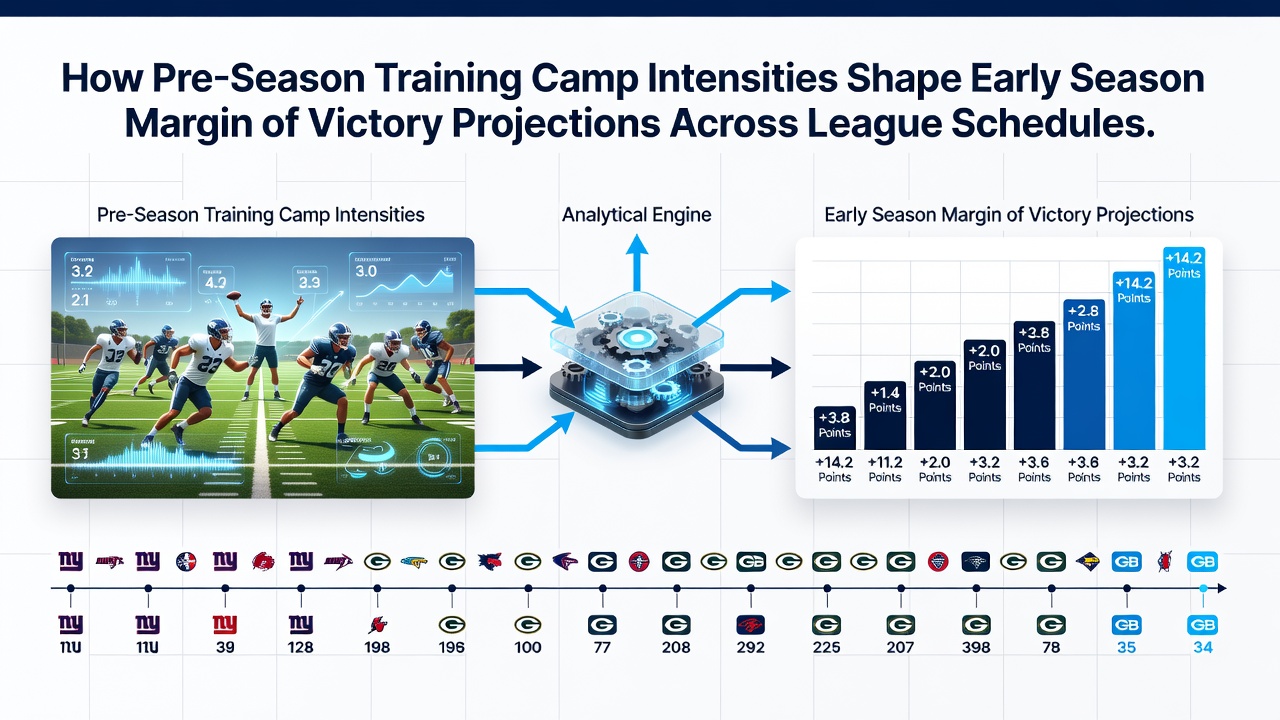
Preseason training camp intensities have drawn increasing attention from analysts tracking early season outcomes across major leagues, and data from multiple sports shows measurable connections between camp workloads and opening month margin of victory patterns. Teams that implement high-volume conditioning blocks in July and August often enter regular season schedules with altered injury profiles and adjusted performance baselines, which in turn affect projected point spreads during the first four to six weeks of competition.
Researchers have documented these patterns through wearable technology that records total distance, high-speed running meters, and acceleration loads during camp sessions. Studies from the American College of Sports Medicine indicate that squads maintaining elevated chronic workloads through August report fewer soft-tissue injuries in September and October, a factor that directly supports tighter margin projections when schedules feature back-to-back road games.
Training Metrics Tracked Across Leagues
League medical staffs now standardize GPS and heart-rate monitoring during camp, creating datasets that feed into margin-of-victory models. In the NFL, for example, teams log cumulative player loads over three weeks of padded practices, while NBA franchises track similar metrics during their shorter October camps. The resulting numbers help performance departments forecast how quickly rotation players recover between early season contests, which influences betting market projections for totals and spreads.
Observers note that compressed schedules amplify these effects. When the NBA begins its 2026-27 campaign in late October, teams coming off high-intensity camps with strong load-management protocols tend to post lower variance in first-quarter scoring margins compared with clubs that scaled back camp volume due to veteran rest protocols.
August 2026 Camp Cycles and Schedule Overlap
August 2026 camps for fall sports coincide with the tail end of summer leagues in basketball and the start of European soccer pre-seasons, creating overlapping data windows for analysts. Reports compiled by the Australian Institute of Sport highlight that rugby and soccer squads ramping up high-speed running volumes in the final two weeks of camp achieve faster adaptation to match tempo, which correlates with smaller early-season margins when they face travel-heavy opening schedules.
Those patterns extend to domestic leagues as well. MLB teams that emphasize live batting practice and bullpen intensity during August Grapefruit and Cactus League sessions show measurable differences in run differential during the first month of the season, particularly in games involving cross-country travel.
Injury Rates and Margin Volatility
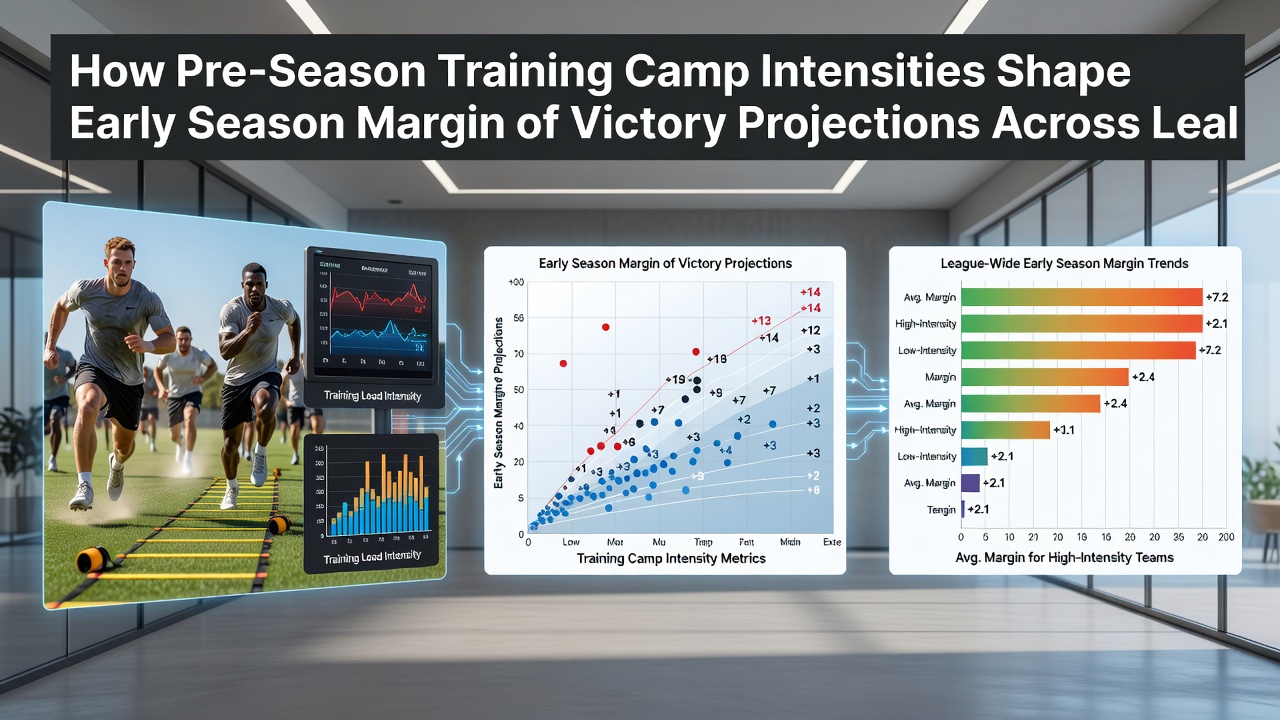
Injury surveillance data released by the NCAA Injury Surveillance Program demonstrates that elevated acute-to-chronic workload ratios during preseason increase soft-tissue injury incidence by measurable percentages in the first three weeks of conference play. When key rotation players miss early contests, projected margins widen, especially in road environments where bench depth matters most. Analysts incorporate these injury probabilities into opening-week models, adjusting spreads accordingly across conference schedules.
Conversely, teams that distribute camp loads more evenly report lower week-one variance in scoring margins. Data from European soccer federations shows similar trends, where clubs logging moderate high-intensity sessions in late July maintain narrower goal differentials during August and September league fixtures.
League Schedule Density Considerations
Schedule density interacts with camp intensity in ways that affect projection accuracy. The NBA's 2026-27 slate features multiple four-games-in-five-nights stretches in November, periods when squads with superior camp conditioning profiles historically post smaller margin deviations. In the NFL, teams with lighter August workloads sometimes struggle in Week 1 and Week 2 when facing opponents that maintained full-padded intensity, resulting in wider point differentials that align with adjusted projection models.
Those who study these interactions point to roster continuity as an additional variable. Teams returning most of their core rotation after moderate camp loads tend to stabilize margins faster once the regular season begins, whereas clubs integrating new personnel after high-load camps require additional weeks to reach comparable consistency.
Conclusion
Preseason training camp intensities supply quantifiable inputs that shape early season margin of victory projections across professional league schedules. Wearable data, injury surveillance programs, and schedule density analyses together allow performance staff and modelers to refine forecasts for opening weeks, particularly when August camp cycles set the physical baseline for September and October competition. As monitoring technology continues to evolve, these connections between camp workloads and early season outcomes remain central to accurate projection frameworks.