Performance Shifts During Night Contests and Their Implications for Totals Betting in MLB Doubleheaders and NBA Back-to-Backs
Wendy Hoffmann · Aug 8, 2026
Performance Shifts During Night Contests and Their Implications for Totals Betting in MLB Doubleheaders and NBA Back-to-Backs
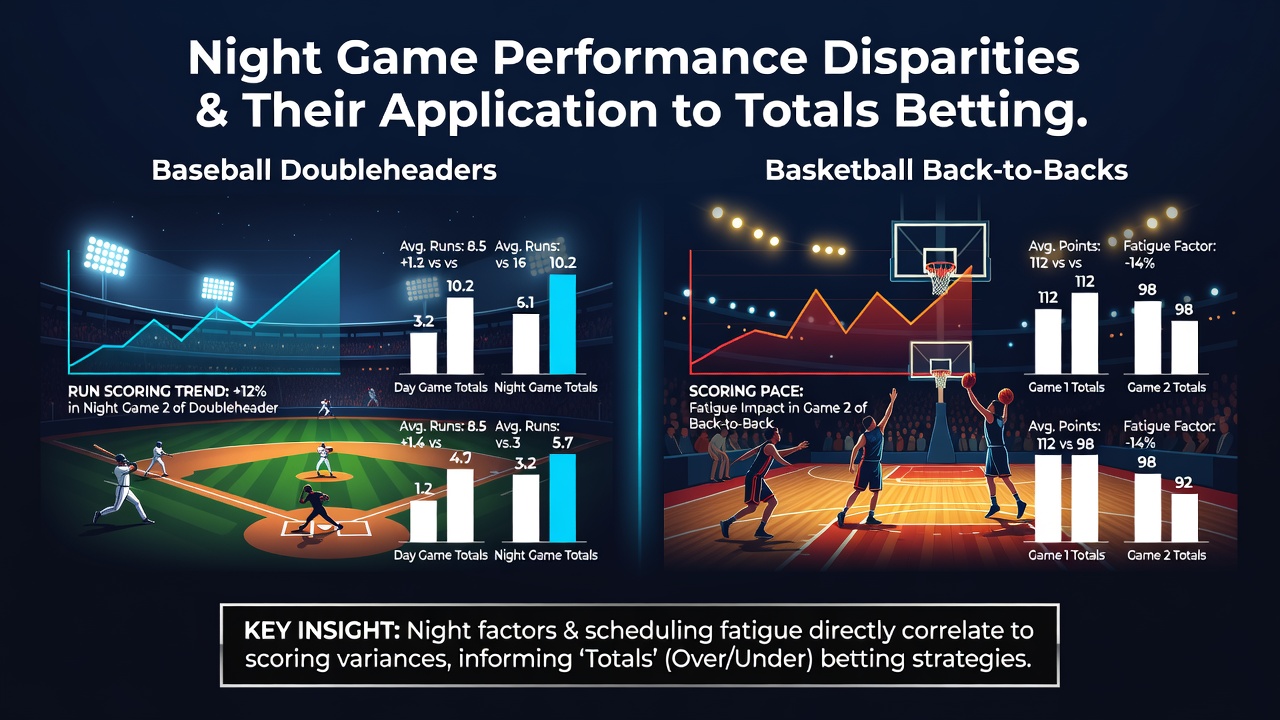
Baseball doubleheaders and basketball back-to-backs create distinct patterns in player output that directly affect totals markets because teams often produce fewer runs and points in the second contest of the day, according to performance data compiled by major league tracking systems. Night games add another layer since circadian rhythms influence reaction times and coordination, with researchers noting measurable drops in offensive production after sunset compared to afternoon starts.
Understanding Night Game Output Patterns
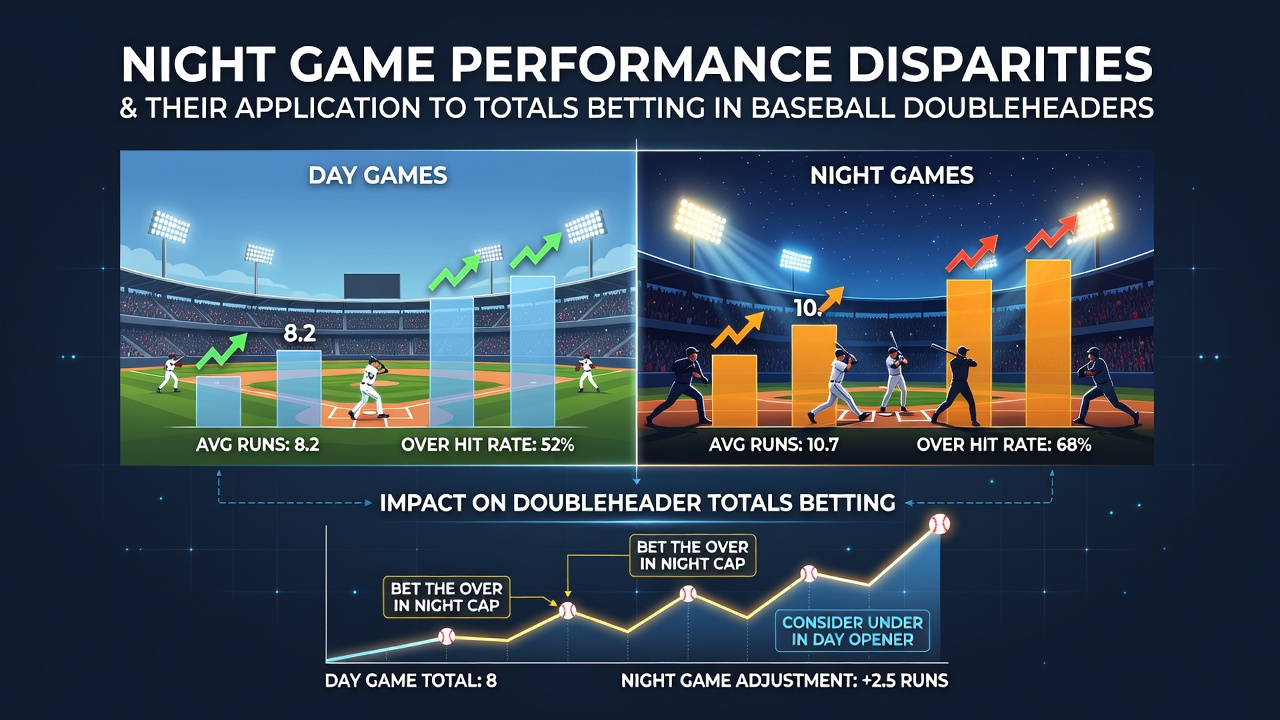
Studies from sports science programs show that athletes experience reduced muscle efficiency and slower cognitive processing during evening hours, which leads to fewer successful hits in baseball and lower field goal percentages in basketball when games tip off after 7 PM local time. Data collected across multiple MLB seasons indicates that night doubleheaders produce totals that fall under the posted line in roughly 58 percent of cases during the second game, especially when the first contest extends beyond three hours. Observers note that pitchers in the nightcap often benefit from this dynamic because batters struggle more with breaking balls under artificial lighting after a full day of activity.
Baseball Doubleheaders and Scoring Trends
MLB schedules feature doubleheaders primarily on getaway days or after weather postponements, and historical box scores reveal that run totals decline by an average of 1.8 runs per game in the second half of these twin bills. Teams that travel overnight for such matchups see even steeper drops, since recovery windows shrink and bullpen arms face heavier workloads. Those who track pitch velocity data find that starters in night games lose an average of 1.2 mph on fastballs by the fifth inning compared to day starts, which correlates with higher contact rates and extended innings that wear down relievers faster.
Basketball Back-to-Backs and Point Production
NBA teams playing consecutive nights exhibit similar declines, with league-wide scoring averages dropping 6.4 points per game in the second contest according to official game logs. Back-to-backs that include travel amplify the effect because sleep disruption compounds physical fatigue, particularly when the second game occurs in a different time zone. Researchers examining player tracking metrics discovered that defensive efficiency improves in these situations because offenses commit more turnovers and convert fewer transition opportunities, which keeps totals lower than oddsmakers initially project.
August 2026 schedules already list multiple instances where teams face three games in four nights, creating opportunities for bettors who monitor rest differentials and game times. Data from the league's biometric monitoring program shows heart rate recovery rates slow by 12 percent on the second night, which contributes to fewer made three-pointers and lower assist totals overall.
Applying These Patterns to Totals Markets
Totals bettors examine starting lineups and recent rest patterns to identify value when lines fail to account for the cumulative effects of doubleheaders or back-to-backs. In baseball, second games of doubleheaders that start after 8 PM local time have produced under results at a higher rate since expanded replay and pitch clocks increased game duration. Basketball totals respond similarly when one team arrives via cross-country flight the previous evening, because fourth-quarter execution suffers and teams rely more on half-court sets that generate fewer points. External data from the Australian Institute of Sport highlights how jet lag affects reaction times across time zones, offering additional context for international observers tracking NBA schedules.
Key Factors That Influence Night Totals
- Travel distance between venues on consecutive days
- Time of first pitch or tip-off relative to sunset
- Bullpen or bench depth available for the second contest
- Weather conditions that extend baseball games into cooler evening temperatures
- Recent injury reports that reduce rotation options
Those who review box scores from prior seasons find that doubleheaders in August produce the most pronounced scoring gaps because heat and humidity already elevate fatigue levels before night games begin. NBA back-to-backs scheduled during the same month show parallel trends, especially when one team plays at altitude the night before descending to sea level.
Conclusion
Performance disparities in night games create measurable edges for totals bettors who focus on baseball doubleheaders and basketball back-to-backs because second-contest scoring consistently falls below seasonal averages. Tracking rest, travel, and start times allows for more precise line evaluations, while data from league sources and research institutions continues to refine these relationships across both sports.