Penalty Shootout Mind Games Drive Shifts in Live Soccer Betting Markets
Theo Werner · Aug 24, 2026
Penalty Shootout Mind Games Drive Shifts in Live Soccer Betting Markets
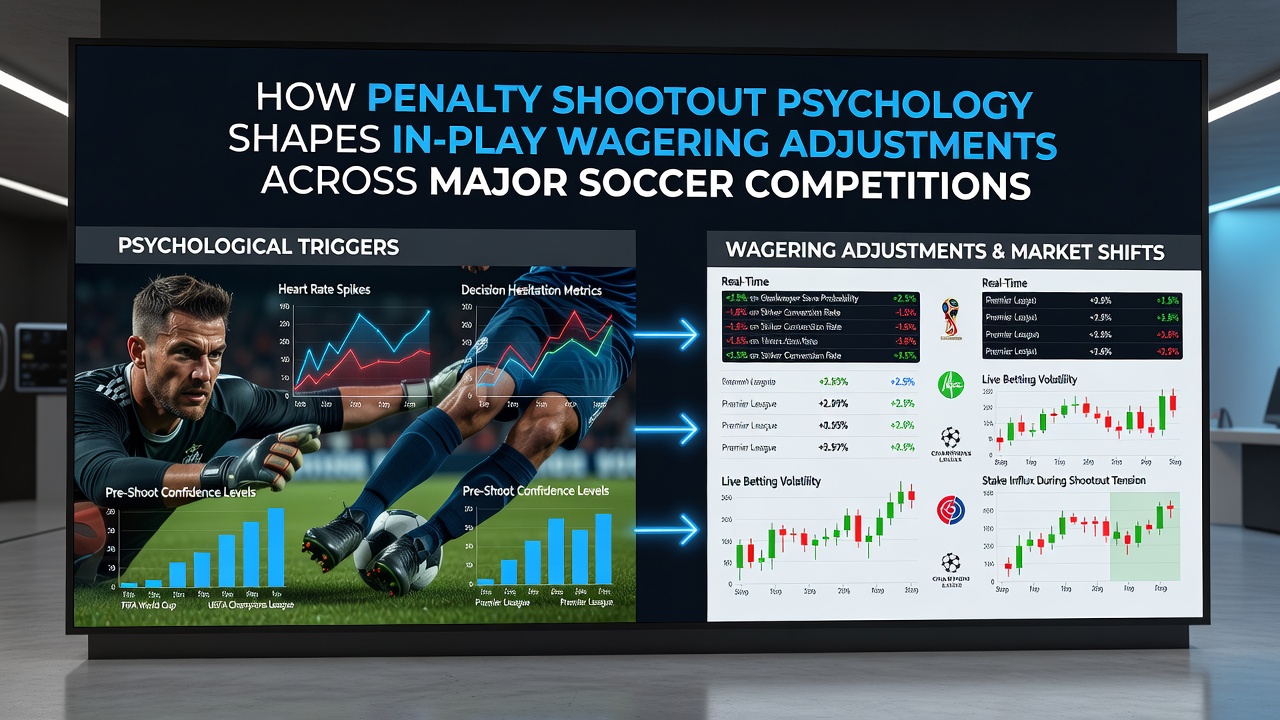
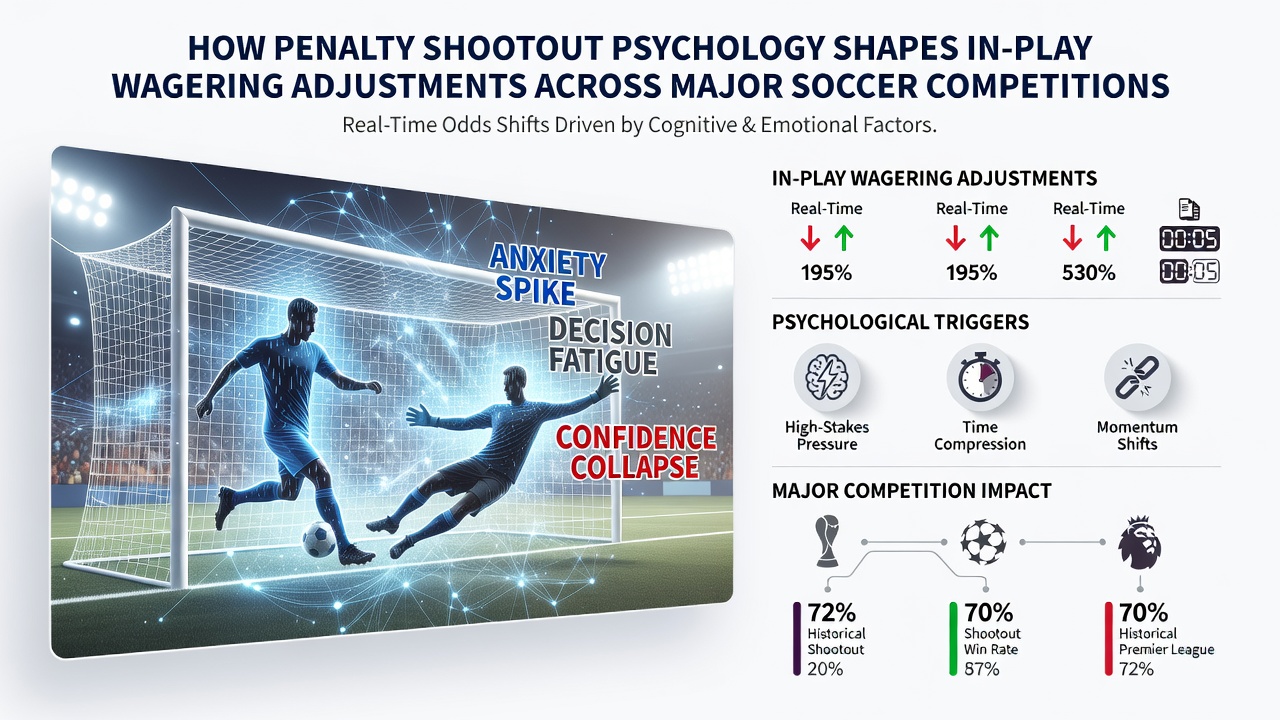
Penalty shootouts create distinct psychological pressures that influence how in-play wagering lines adjust across major soccer events, and bookmakers respond by recalibrating probabilities based on observed patterns in player behavior under stress. Data from FIFA World Cup and UEFA European Championship tournaments shows that success rates drop when kickers face elimination scenarios compared to earlier rounds, with conversion rates falling from 78 percent in group stages to 68 percent in knockout shootouts according to aggregated match records.
Psychological Pressures in High-Stakes Moments
Players encounter elevated cortisol levels during decisive penalties, which researchers link to reduced accuracy on shots aimed at the upper corners of the goal, and studies tracking heart rate variability confirm these physiological responses intensify when the shootout reaches sudden-death phases. Observers note that goalkeepers who dive early in the sequence often force more saves because they disrupt the kicker's planned trajectory, a pattern documented across multiple editions of the UEFA Champions League knockout rounds.
Teams that enter shootouts after conceding late goals in regulation time demonstrate lower conversion percentages on their first two kicks, and analysts attribute this to momentum carryover that affects decision-making speed. In August 2026, following expanded group formats in continental tournaments, these timing effects appear more pronounced as squads manage deeper benches and variable recovery windows between matches.
Live Betting Adjustments During Matches
In-play platforms update odds continuously as matches approach potential extra time, incorporating historical shootout data that factors in individual player records from previous tournaments. When a contest reaches the 80th minute with the score level, live markets widen spreads on next-goal outcomes while simultaneously tightening lines on shootout-specific props such as which team converts its opening kick. This dual adjustment reflects the market's recognition that psychological fatigue accumulates differently depending on the competition's structure and travel demands.
Bookmakers draw from databases covering over 200 shootouts since 2010, and they apply weighting to variables including home-crowd influence and prior penalty experience of listed takers. European operators have integrated these models into algorithms that shift implied probabilities by as much as 12 percent within the final ten minutes of regulation when both sides display fatigue indicators visible through reduced sprint distances tracked by optical systems.
Competition-Specific Patterns Across Major Events
The FIFA World Cup produces the clearest statistical separation between regular-time and shootout performance, while domestic cup competitions such as the FA Cup and Copa del Rey exhibit smaller gaps because squads rotate personnel more aggressively. In the 2022 and 2026 World Cup cycles combined, teams that trained penalty routines weekly recorded 7 percent higher success rates than those relying solely on match simulation, according to coaching reports compiled by confederation technical staff.
UEFA club competitions introduce additional variables through cross-border travel and fixture congestion, and live markets respond by adjusting shootout odds more conservatively when teams have played midweek fixtures within 72 hours. Data compiled by the UEFA technical observatory indicates that such scheduling clusters correlate with increased missed penalties in the second half of shootout sequences.
Data Sources Informing Market Models
Academic analyses published in sports psychology journals quantify the role of goalkeeper positioning and stutter-step approaches, and these findings feed directly into proprietary models used by major betting operators. One comprehensive review covering 1,450 kicks across five major tournaments identified that left-footed takers achieve marginally higher success when shooting to their natural side under pressure, prompting subtle line movements on individual player props once the shootout roster becomes public.
Industry reports from the European Gaming and Betting Association document how operators refine in-play engines to account for these micro-trends, resulting in more granular pricing during the brief window between extra time and the first kick. Markets in Asian and Latin American jurisdictions apply similar frameworks yet place greater emphasis on crowd noise metrics captured through stadium audio feeds.
Conclusion
Penalty shootout psychology continues to shape in-play wagering adjustments because historical performance data, physiological research, and real-time fatigue indicators converge to alter probabilities once matches extend beyond 90 minutes. Across the FIFA World Cup, UEFA Champions League, and continental championships, these factors produce measurable shifts in live odds that reflect documented patterns rather than speculation, and operators maintain evolving datasets to capture emerging trends from expanded tournament calendars.