How Fixture Congestion Reshapes Scoring Patterns Across European Club Competitions and American Pro Leagues
Theo Werner · Jul 20, 2026

How Fixture Congestion Reshapes Scoring Patterns Across European Club Competitions and American Pro Leagues
Fixture congestion occurs when teams face multiple matches within short time frames, and data from major competitions shows measurable shifts in scoring outputs across both European club soccer and American professional leagues. Researchers have tracked these patterns through performance metrics collected during periods of high match density, such as winter schedules in the Premier League and back-to-back sets in the NBA.
European Club Competitions and Congestion Effects
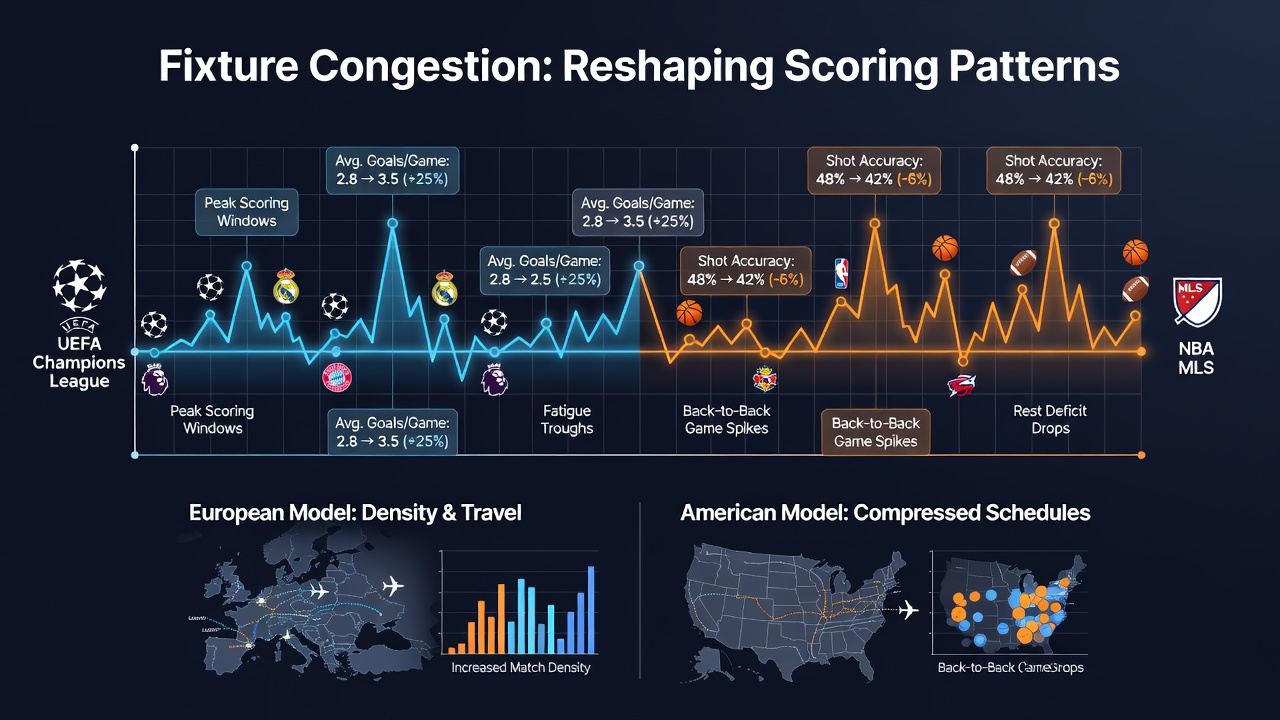
European leagues operate with packed calendars that include domestic cups, continental tournaments, and international breaks, which forces clubs to play several games each week. Studies from sports science programs indicate that goal tallies often decline during these stretches because player recovery time shrinks and defensive errors decrease while attacking efficiency drops. In the UEFA Champions League, teams advancing through multiple knockout rounds have recorded lower average goals per game compared to earlier group stages, according to match data compiled over recent seasons.
Observers note similar trends in domestic leagues where midweek fixtures follow weekend games. Bundesliga records show teams with four matches in fourteen days scoring fewer than 2.5 goals on average in those contests, while Serie A figures reveal comparable reductions in total goals when schedules compress after European nights. And yet the patterns vary by league because recovery protocols and squad depths differ among clubs.
American Pro Leagues and Schedule Density
American leagues present distinct congestion challenges tied to travel demands and game frequency. NBA teams playing on consecutive nights produce fewer points per game on average than those with at least one rest day, as league tracking data demonstrates across multiple seasons. The NBA schedule makers have adjusted some back-to-backs, but the remaining instances still correlate with lower offensive outputs and higher foul rates that limit scoring opportunities.
NFL contests on short weeks, such as Thursday night games after Sunday matchups, show reduced total points in several analyzed seasons. MLB schedules stretch across 162 games, and teams in extended series during summer months exhibit slight dips in run production when pitching staffs face repeated high-workload periods. Researchers have connected these outcomes to cumulative fatigue that affects both offensive execution and defensive positioning.
Comparative Data Across Regions
Comparative analyses highlight how European soccer experiences sharper drops in goals during congestion because matches last ninety minutes plus stoppages and involve high-intensity running. American basketball and football display different adjustments, with scoring margins narrowing rather than totals collapsing outright. Data indicates that European clubs rotate more aggressively in later season stages, which sometimes restores scoring levels once fresh players enter lineups.
What's interesting is how international tournaments amplify these effects. The 2026 World Cup preparations have already influenced club schedules in July 2026, with some leagues pausing earlier to accommodate national team windows. Those pauses create brief recovery periods that studies link to rebounding scoring rates in the weeks that follow.
Recovery Strategies and Performance Metrics
Clubs and franchises deploy various tools to counter congestion, including load management systems and sports science monitoring. European teams often rely on GPS tracking to limit minutes for key players, while NBA organizations use rest protocols that alter lineup compositions on back-to-back nights. Evidence from performance databases shows these interventions can stabilize scoring outputs, though complete elimination of congestion effects remains rare.
Academic papers published in journals such as the International Journal of Sports Physiology and Performance document how heart rate variability and muscle recovery markers predict scoring declines when rest intervals fall below forty-eight hours. Similar findings appear in reports from North American sports medicine groups that track collegiate and professional athletes.
Seasonal Variations and Long-Term Trends
Long-term league statistics reveal that scoring patterns shift most noticeably in the final third of seasons when fixture piles reach their peak. European domestic cups produce lower goal averages in later rounds, and American playoff series show tighter scoring distributions compared to regular-season games. Teams with deeper benches maintain higher outputs, whereas those with thinner rosters experience steeper drops.
Yet schedule makers continue to balance commercial demands against recovery needs, which keeps congestion as a recurring factor. Figures from league archives indicate that total goals and points fluctuate year to year based on how many midweek slots appear in calendars, with denser periods consistently producing altered distributions.
Conclusion
Fixture congestion continues to influence scoring across these competitions through measurable changes in player output and match dynamics. European club data and American league records both demonstrate that reduced recovery time correlates with shifts in goals and points, though the magnitude differs by sport adn region. Ongoing monitoring by researchers and league officials provides updated metrics that track these relationships as calendars evolve.