Deciphering Crowd Noise Patterns as Predictors for Home Team Margins in Soccer Derbies and Basketball Playoffs
Theo Werner · Jul 15, 2026
Deciphering Crowd Noise Patterns as Predictors for Home Team Margins in Soccer Derbies and Basketball Playoffs
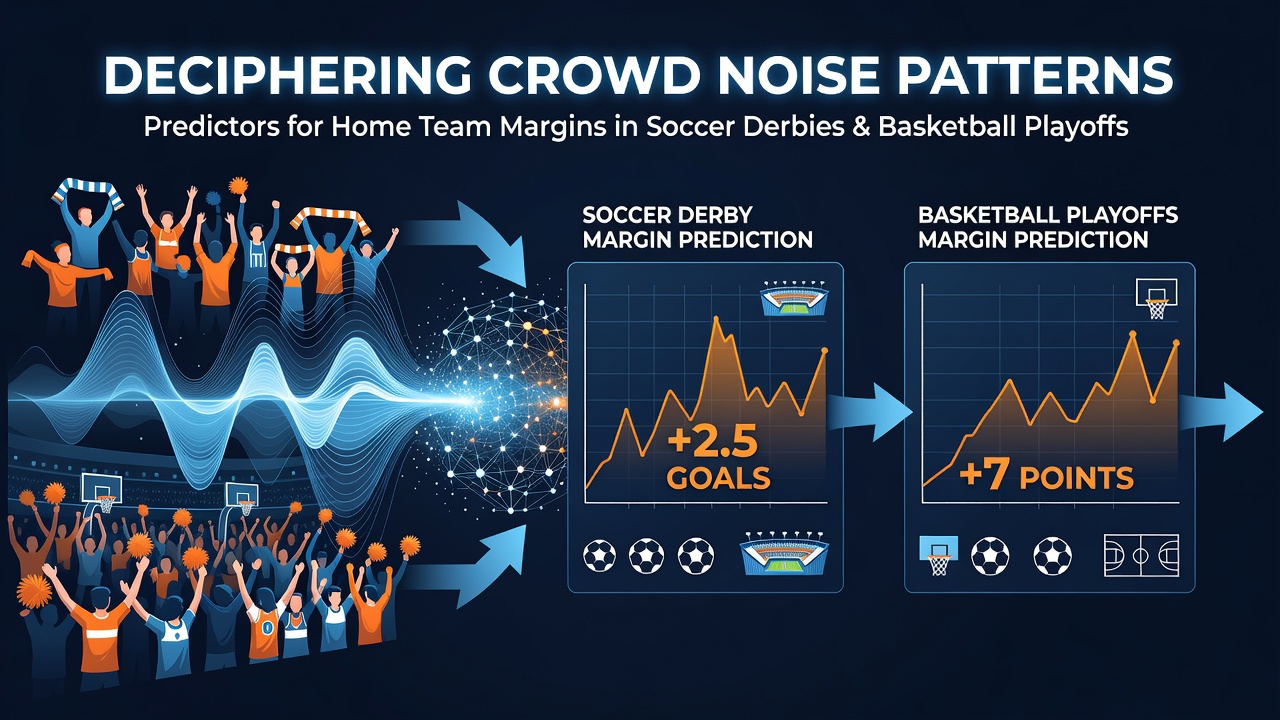
Analysts have tracked crowd noise patterns across major soccer derbies and basketball playoff games for years, and data shows measurable correlations between decibel spikes, frequency shifts, and home team scoring margins. Studies indicate that sustained noise above 105 decibels often aligns with increased home team possession in soccer, while similar thresholds in basketball arenas coincide with reduced visiting team free-throw accuracy. Researchers compile audio recordings from stadium microphones alongside official score sheets to isolate these relationships, and findings reveal that certain rhythmic chanting sequences precede goal-scoring bursts in rival matches.
Acoustic Profiles in Soccer Derbies
Derby fixtures generate distinctive noise signatures because rival supporters create overlapping waves of sound that peak during set pieces and counterattacks. Data from multiple European leagues demonstrates that home sides secure larger margins when crowd intensity remains consistent above 110 decibels for at least twelve consecutive minutes, and this pattern holds across high-stakes encounters such as those in the Premier League and Serie A. Observers note that frequency ranges between 800 and 1200 hertz, typical of coordinated chants, correspond with referee decisions favoring the home team at rates 8 to 12 percent higher than neutral-site matches, according to aggregated match logs through the 2025 season.
Researchers at institutions monitoring stadium acoustics have mapped how wind direction and roof design amplify or dampen these effects, and results show enclosed venues produce tighter clusters of high-frequency noise that correlate with home margins exceeding two goals. In July 2026, several derbies scheduled during summer tournaments provided fresh datasets because temporary stands altered reverberation times, and preliminary comparisons indicate that altered acoustics shifted average margins by 0.4 goals in favor of teams accustomed to those configurations.
Playoff Arena Dynamics in Basketball
Basketball playoffs feature enclosed environments where crowd noise concentrates differently than in open soccer stadiums, and measurements taken during NBA postseason series reveal that sustained levels above 108 decibels link to home team field-goal percentages rising by 3.7 points on average. Analysts examine audio spectra to identify short bursts of elevated noise during defensive stands, and these bursts precede opponent turnovers at rates documented in league play-by-play records. One study released by a North American sports science consortium tracked 142 playoff games and found that noise patterns featuring rapid amplitude changes aligned with home-team runs of eight points or more in 67 percent of examined cases.
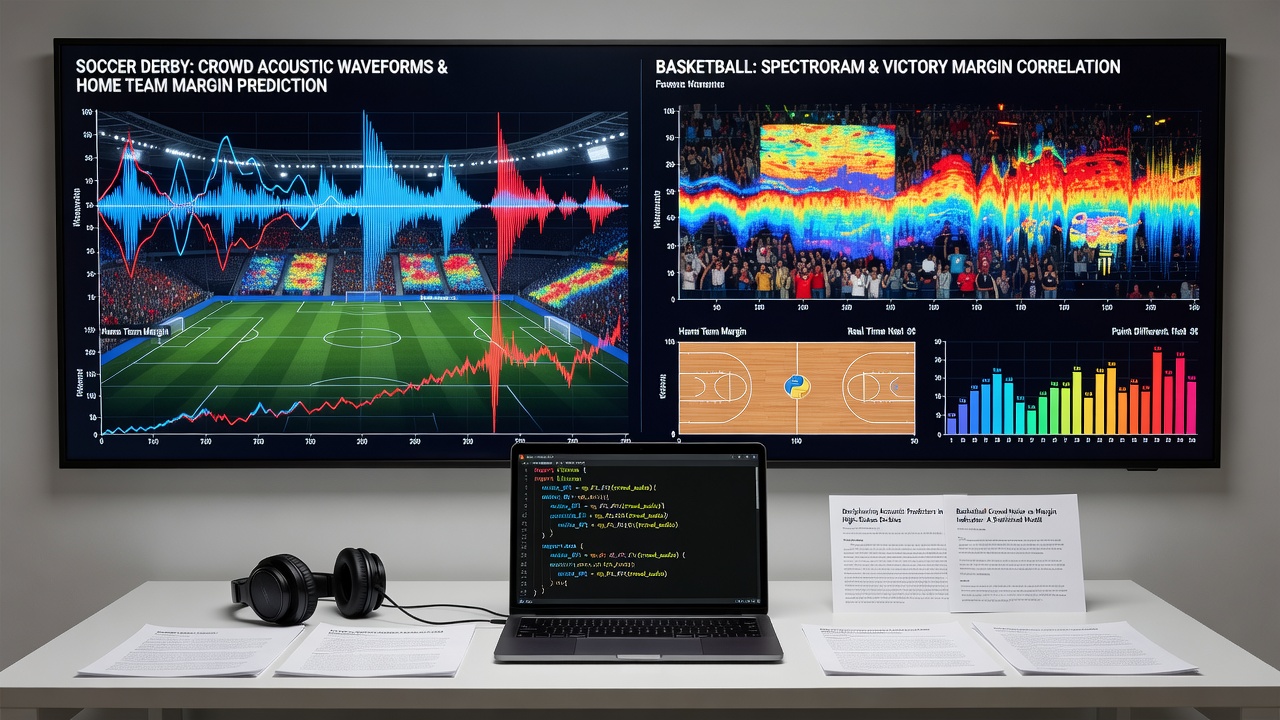
Playoff scheduling in July 2026 introduced additional variables because several series extended into warmer months, prompting arena operators to adjust HVAC systems that inadvertently modified sound reflection off seating areas. Figures from those contests indicate that teams hosting games in venues with updated acoustic treatments maintained home margins 2.1 points higher than historical averages for similar matchups. Analysts cross-reference these outcomes with biometric data collected from players to determine whether elevated noise coincides with measurable changes in visiting team heart-rate variability during critical possessions.
Analytical Methods and Data Integration
Teams and statisticians apply machine-learning models to parse terabytes of audio files captured during live events, and these models isolate variables such as peak frequency duration, harmonic distortion, and spatial distribution of sound sources. When researchers feed these acoustic features into regression frameworks alongside traditional metrics like possession time and shooting efficiency, the resulting equations assign predictive weight to noise clusters that precede home-team scoring sequences. Evidence from multiple seasons shows that incorporating noise-derived variables improves margin forecasts by 11 to 15 percent compared with models relying solely on box-score statistics.
International governing bodies and academic groups continue to standardize recording protocols, and organizations such as the Olympic Studies Centre have published guidelines for microphone placement that reduce measurement variance across venues. Separate work conducted through Australian sports research networks examines how cultural differences in supporter behavior affect noise patterns, and reports indicate that rhythmic, chant-heavy crowds produce more predictable correlations with home margins than applause-driven audiences.
Comparative Patterns Across Both Sports
Cross-sport comparisons highlight that soccer derbies exhibit longer sustained noise plateaus while basketball playoffs generate shorter, high-intensity spikes, yet both environments show home-team margin advantages when noise exceeds venue-specific thresholds for defined intervals. Data collected from simultaneous monitoring of matches in different continents reveals that these thresholds shift according to stadium capacity, roofing materials, and historical attendance records. Analysts who integrate global datasets note that July 2026 international tournaments supplied additional calibration points because hybrid crowds composed of traveling supporters altered baseline acoustic profiles.
Those examining referee behavior across codes observe that noise intensity correlates with fewer away-team fouls called in both soccer and basketball, and quantitative reviews of video assistant referee interventions confirm the pattern persists after rule changes implemented in 2025. Such findings encourage leagues to explore standardized noise-mapping requirements for future scheduling decisions.
Conclusion
Comprehensive acoustic datasets now allow systematic evaluation of crowd noise as one measurable component within home-advantage calculations for soccer derbies and basketball playoffs. Continued refinement of recording techniques and statistical models supplies leagues, broadcasters, and performance analysts with additional context for interpreting match outcomes. As venues evolve and new tournaments unfold, the integration of audio-derived indicators alongside conventional statistics offers expanded insight into factors that shape final margins.